

Cumaru
Name
• Scientific name: Dioterix spp
• Spanish name: Cumaríº
Origin
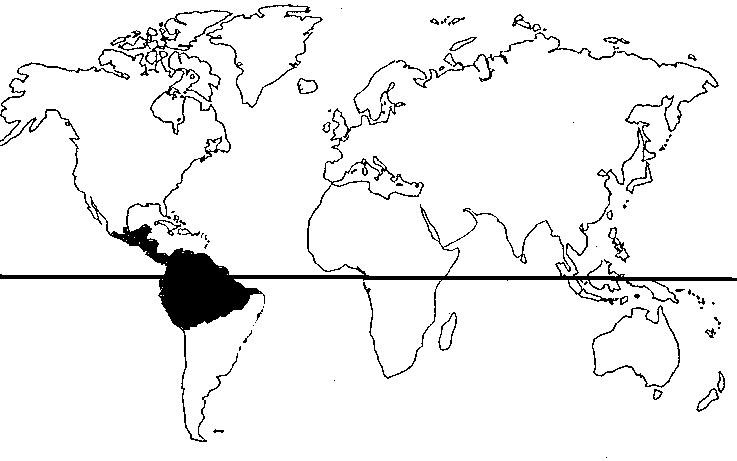
Description of the wood
• Sapwood: Yellowish-white.
• Heartwood: Yellowish-brown to reddish-brown.
• Grain: Straight, often quite interlocked.
• Texture: Medium.
Impregnation
• Sapwood: Moderately impregnable
• Heartwood: Poorly impregnable
Mechanization
• Sawing: Difficult due to its hardness and silica content, requiring sharp saw blades and high power.
• Drying: Very slow. Slight risk of cracking. High risk of splitting and lesser risk of warping.
• Planing: Difficult due to its hardness, exhibiting widespread grain due to its interlocked fibers. Machining should be carried out very slowly.
• Gluing: Problems are reported due to its tannin content.
• Nailing and screwing: Inherently difficult due to its hardness. Pre-drilling is necessary.
• Finishing: The grain necessitates careful sanding.
Applications
• Interior carpentry: doors, stairs, paneling, moldings, baseboards, wainscoting, and especially parquet flooring.
• Exterior carpentry: doors and windows.
• Structural carpentry: interior and exterior.
• Decorative veneers.
• Cooperage.
Mechanical properties
• Static bending strength: 1,780 kg/cm²
• Modulus of elasticity: 220,000 kg/cm²
• Compressive strength parallel to the axis: 680 kg/cm²
To be considered
- It is the South American wood most similar to the African Tali-Elondo. A very suitable species for outdoor decking, a good substitute for Ipe and is frequently confused with it.