

Sapelly
Name
• Scientific: Entadrophagma cylindricum Sprague
• Spanish: Sapelli, Abebay
Origin
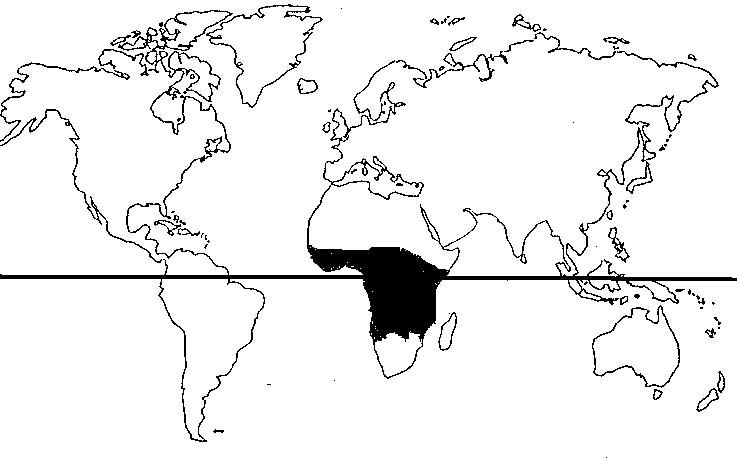
Description of the wood
• Sapwood: Pinkish-white to pinkish-gray.
• Heartwood: Pinkish when freshly cut, turning reddish-brown to purplish-brown with exposure to light.
• Grain: Straight, often with slightly interlocked grain.
• Texture: Fine to medium.
Impregnation
• Sapwood: Moderately impregnable
• Heartwood: Poorly impregnable
Mechanization
• Sawing: No problems.
• Drying: Medium to slow speed. Minor risk of warping due to roofing and cracking.
• Planing: No problems except for the slight sheen produced by pieces with interlocked grain. It bends very well.
• Gluing: No difficulties.
• Nailing and screwing: No difficulties.
• Finishing: Very few difficulties.
Applications
• Fine interior and exterior furniture and joinery.
• Bentwood furniture. Turned furniture.
• Interior joinery: doors, paneling, moldings, baseboards, wainscoting, parquet flooring.
• Exterior joinery: doors and windows.
• Decorative veneers.
Mechanical properties
• Static bending strength: 1,150 kg/cm²
• Modulus of elasticity: 120,000 kg/cm²
• Compressive strength (parallel): 590 kg/cm²
• Tensile strength (parallel): 860 kg/cm²
To be considered
- In the ATIBT book it is shown with a Latin I, however in Spain the letter Y is commonly used.