

Palo Rojo
Name
• Scientifically: Pterocarpus buettneri Taub.; P. Osun
Craib; P. Tinctorius Welw
• Spanish: Palo rojo; Padouk de Africa
Origin
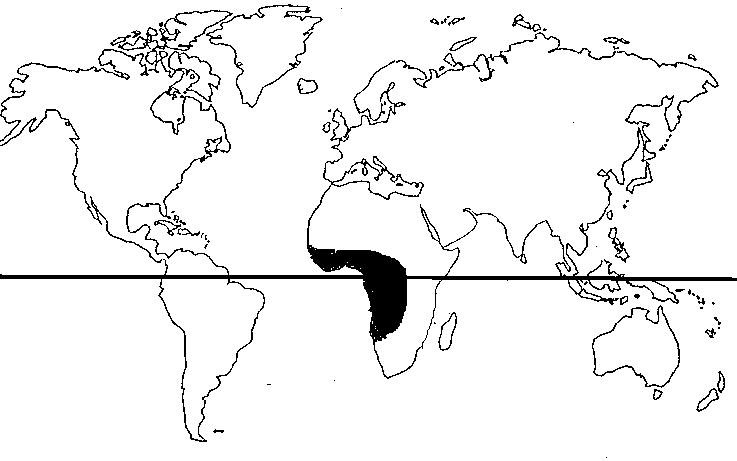
Description of the wood
• Sapwood: Whitish.
• Heartwood: Deep red that darkens to dark brown in the light. Often with dark brown streaks.
• Grain: Straight. Often slightly interlocked.
• Texture: Medium to coarse.
• Defects: Pockets of white deposits.
Impregnation
• Sapwood: Impregnable
• Heartwood: Moderately impregnable
Mechanization
• Sawing: Hard with some abrasive effects.
• Drying: Medium to slow speed. Small risk of warping and cracking.
• Planing: In addition to its hardness and abrasiveness, warping is possible when the grain is interlocked. Suitable for carving and bending.
• Gluing: Some difficulties due to its oil content.
• Nailing and screwing: Requires pre-drilling.
• Finishing: No difficulties.
Applications
• Fine interior and exterior furniture and joinery.
Turned and carved furniture.
• Interior carpentry: doors, paneling, moldings, baseboards, friezes, and staircases.
• Exterior carpentry: doors and windows.
• Structural carpentry.
• Decorative veneers.
Mechanical properties
• Static bending strength: 1,450 kg/cm²
• Modulus of elasticity: 124,000 kg/cm²
• Compressive strength parallel to the axis: 650 kg/cm²