

American Cedar
Name
• Scientific name: Cedrela odorata L.
• Spanish name: American cedar. Tropical cedar
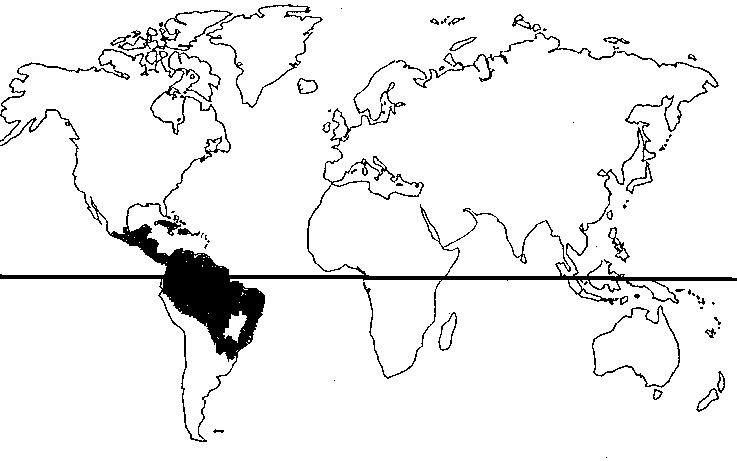
Origin
Description of the wood
• Sapwood: Pinkish-white.
• Heartwood: Pinkish-brown to light red, darkening in sunlight.
• Grain: Straight, often slightly interlocked.
• Texture: Medium.
Impregnation
• Sapwood: Moderately impregnable
• Heartwood: Moderately to non-impregnable
Mechanization
• Sawing: Easy, no problems
• Drying: Relatively slow. Slight risk of collapse. Slight risk of warping and cracking. High risk of resin exudation.
• Planing: Easy. Risk of warping in pieces with interlocked grain.
• Gluing: No problems, unless there is excessive resin exudation, in which case it is advisable to clean them beforehand with organic solvents.
• Nailing and screwing: Easy
• Finishing: No problems, except for the aforementioned issues with exudation.
Applications
• Indoor and outdoor furniture and joinery. Carved furniture.
• Interior carpentry: doors, stairs, paneling, moldings, baseboards, friezes.
• Exterior carpentry: doors and windows.
• Cigar boxes.
• Decorative veneers and plywood.
Mechanical properties
• Static bending strength: 753 kg/cm²
• Modulus of elasticity: 90,000 kg/cm²
• Compressive strength parallel to the beam: 415 kg/cm²
To be considered
- Important Notice: This species is protected under the CITES Convention. It is listed in Appendix III for populations in Colombia and Peru. A CITES export permit is required for specimens obtained in Colombia and Peru. If obtained in these countries, a certificate of origin issued by the CITES Management Authority of the exporting or re-exporting country is also required.
This documentation must be requested at the time of purchase.