

Afromorsia
Name
• Scientific name: Pericopsis elata Van Meeuwen, Afrormorsia elata Harms.
• Spanish name: Afromorsia, Asamela.
Origin
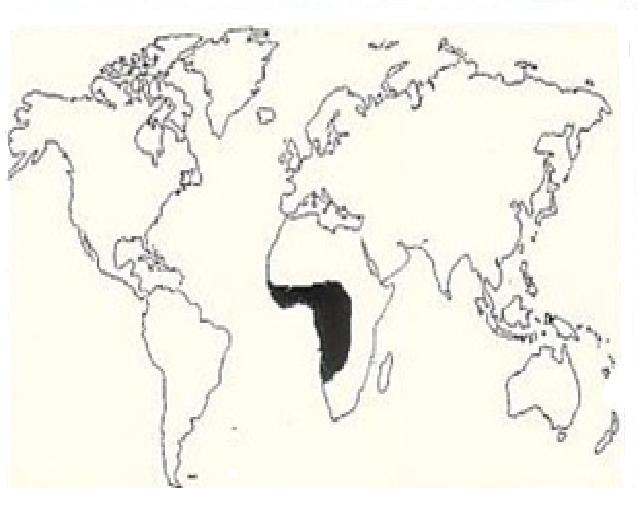
Description of the wood
• Sapwood: Pale yellowish-brown
• Heartwood: Yellowish-brown, darkens with exposure to light
• Grain: Straight or interlocked
• Texture: Varies from fine to medium
• Defects: The tannins it contains can cause blue staining
Impregnation
• Sapwood: Impregnable
• Heartwood: Not impregnable
Mechanization
• Sawing: Powerful dust extraction systems required.
• Drying: Slow. Risk of cracking and warping.
• Gluing: No problems.
• Nailing and screwing: Requires pre-drilling.
• Finishing: No problems.
Applications
• Cabinetmaking
• Veneers for decorative coverings
• Interior carpentry: flooring, stairs, moldings
• Exterior carpentry
• Shipbuilding: bridges, ship decks
• Turning
Mechanical properties
• Static bending strength: 1,190 kg/cm²
• Modulus of elasticity: 129,000 kg/cm²
• Compressive strength parallel to the axis: 650 kg/cm²
To be considered
- It is the African wood most similar to Asian teak.
Attention, very important: It is a species protected by the CITES Convention. It is listed in Appendix II. Therefore, it requires a special export permit or a re-export certificate. This must be requested at the time of purchase.